Maria Trusa: The Power of Breaking the Silence
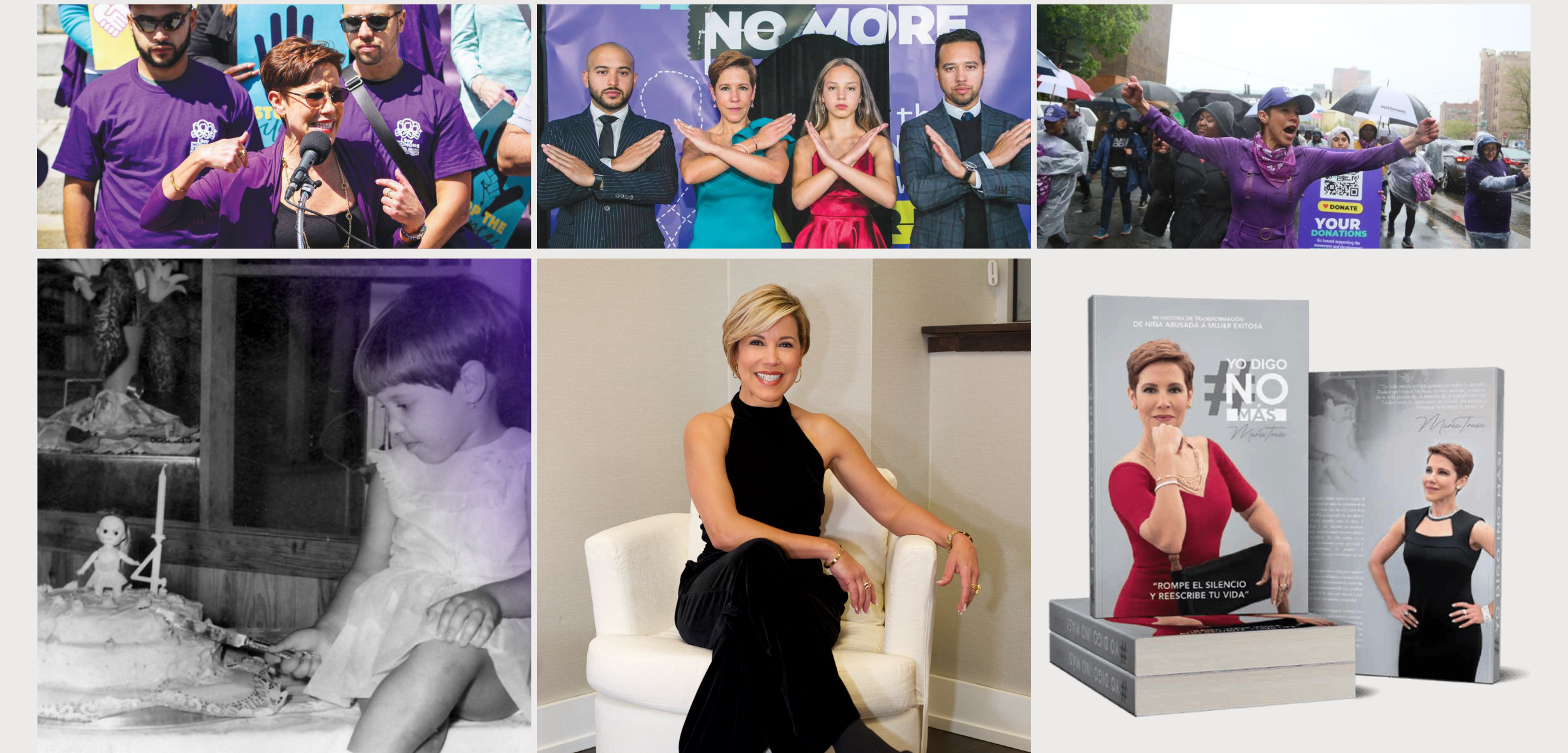
María Trusa built a career on precision and endurance. She spent decades inside New York’s healthcare system, rising to executive director at Scarsdale Medical Group and helping expand a practice from a small operation into a large medical center. Later, she helped reshape Formé Medical Center, focused on serving vulnerable Hispanic patients, including those without documentation or access to traditional safety nets.
María grew up in the Dominican Republic, moving repeatedly—more than seventeen homes by the time she was eight. After her parents separated, her mother migrated to the United States for work, while María and her brothers remained behind in their father’s care. At nine, she survived a sexual assault that she did not speak about publicly for decades.
María migrated to the United States and reunited with her mother at 15. Over the following years, she learned English, built a career, raised a family, and established herself professionally. In her fifties, a serious health crisis forced her to pause and reassess. In 2019, María returned to the Dominican Republic during the filming of the documentary Triumph of the Entrepreneurial Spirit. In the film, she spoke publicly for the first time about the sexual assault she experienced as a child. The following year, she published #YoDigoNoMas (“I Say No More”). In 2021, she launched the #YoDigoNoMas talk show.
Why did you decide to write the book?
María Trusa: Writing the book meant breaking my own silence around what I call the silent pandemic of sexual abuse—especially the abuse of children. It’s a hard story to tell. Even after sharing it hundreds of times, it’s still hard. Trauma lives in the body. The body remembers.
I was nine years old in the Dominican Republic when something happened that changed my life. While I was under my father’s care, I was sexually assaulted by a friend of his. I stayed silent about it for many years, and that silence shaped my life long before I understood its effects. For a long time, I didn’t have language for what I was carrying. I built a life, I worked hard, I succeeded, but the past was still present. Healing didn’t begin until I stopped protecting the silence. Before the book, I was asked to be part of a documentary — Triumph of the entrepreneurial spirit. I went back to the Dominican Republic, to the place where I was abused, and I confronted the little girl inside me. It was one of the most liberating experiences of my life. I went back to speak to the little girl I was that night. I wanted her to know that we survived, that we are okay. Closing that chapter meant confronting the past instead of letting it continue to shape my present.
Why was it important for you to share your story publicly, after so many years of silence?
When the book came out, I started doing interviews; Channel 4, CNN, and others. I thought I was just promoting the book. I didn’t realize that speaking publicly would open something much larger. People began coming to me. So many people. That’s when I understood: this isn’t just my story. There are so many survivors living in silence. There is a pandemic of sexual abuse of children in the Latino community. It has a lot to do with colonisation. The children were abused, the children became the abusers, and so the cycle continues. Many survivors don’t come forward because they fear disbelief or judgment. Creating space for people to speak safely changes everything. People don’t need to be fixed, but rather believed. I started doing a lot of public speaking events where I openly talked about what happened to me, and it transformed into launching a talk show — Yo Digo No Mas, it's a space for others to share their stories and start their own healing process. We shared over 30 stories and are now on our 5th season. In 2023, one of our guests was Mike Spano, the Mayor of Yonkers, and he shared publicly for the first time that he was sexually abused as a child. And that mattered. Because when someone in his position speaks openly, it tells others, you’re not weak for telling the truth. It tells them they’re not alone, and that silence is not the price of survival.
What needs to change so children are protected earlier, before abuse has the chance to continue?
This November I’m launching a new program focused on teaching parents how to protect their children from sexual abuse, which most often happens before the age of eight, when children don’t yet understand what’s happening or aren’t believed. The program works with parents and schools to teach age-appropriate conversations, how to recognize abuse, how to protect children, and how to begin healing — and yes, I’m deeply committed to this work.
In your book, you write about forgiveness as part of healing. Why did forgiveness become necessary for you?
Forgiveness didn’t come easily for me. It took years before I understood that it wasn’t something I was doing for anyone else—it was something I needed for myself. Holding onto people you cannot forgive is like keeping them locked in a prison cell. You keep going back to check on them, to make sure they’re still there, until one day you realize you’ve never actually left the cell yourself.
In my book, I write that “forgiving is perhaps the most difficult—and the most healing—act we can perform.” I learned that there were only two choices: remain bound to the pain of the past, or forgive and move forward into a different future. Forgiveness didn’t erase what happened to me, but it gave me back my life. Ironically, forgiving my father was the first step toward forgiving myself. And once that happened, everything else began to change.
The skirt I created for María features bold aquarelle-painted floral motifs in violet, a reference to the logo of her NGO, and is adorned with delicate domino-shaped beads. Like the game itself, the domino suggests connection and continuity — how one movement can quietly give rise to another, continuing beyond the moment it is seen.